Krav Maga Progression at Krav Maga Auckland
A structured, proven pathway — and a genuine challenge worth taking on.
Progression at Krav Maga Auckland follows the internationally recognised Krav Maga Global (KMG) curriculum — Practitioner levels P1 to P5, then Graduate levels. P1 gradings run three times a year, P2–P5 twice, and Graduate once, each with dedicated preparation sessions beforehand. Grading is a priority here, but never compulsory.

Why a Curriculum, Not Just Classes
Training without a structure eventually starts to feel like the same class over and over. A clear curriculum changes that — regular classes revisit and develop skills within a clear structure, progress becomes measurable, and training stays motivating rather than repetitive.
Every class at Krav Maga Auckland follows the internationally recognised KMG curriculum — the same system used by KMG clubs worldwide. For the full breakdown of how that system is structured, see KMG New Zealand's guide to the level system. This page is about how that system plays out here, week to week, for you.
Capability Before Certificates
Every grading here should mean something. The goal was never to simply hand out diplomas — it's to develop people who can actually perform under pressure. That's why standards stay high: when you're awarded a new level, you should genuinely deserve it.
That standard protects the value of every grading, and gives you real confidence in what you've achieved — not just a piece of paper.
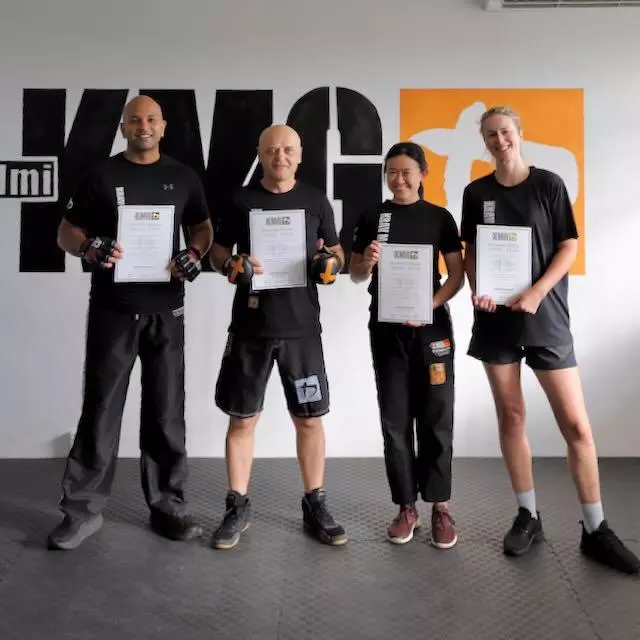
Not Just "We Have Gradings" — We Actively Coach You Through Them
Progress doesn't only happen on the mats. Here's what supports it, in class and between sessions.
Train through the internationally recognised KMG syllabus — every class connects to a clear level and purpose.
Opportunities throughout the year to demonstrate your progress — full schedule below.
Core, Intermediate, Advanced and Instructor sessions — every class has a purpose tied to your current level.
The Essentials video course from day one, then ongoing video resources to review technique between sessions.
Regular coaching in class on what's working and what to improve next.
Dedicated curriculum review and revision sessions in the lead-up to every grading, so you're not walking in cold.
From Your First Session to Instructor Development
Every member starts the same way: an intro session, then the Essentials programme alongside live classes in your first month. From there you move through four class stages, each with its own focus — shown below.
For those who want to go furthest, the path leads into instructor development through the KMG instructor pathway.

Instructor Brad walked this path here
Brad started as Instructor Aaron's student in this club. He graded through the Practitioner levels, completed KMG's General Instructor Course with Master Eyal Yanilov in November 2019, and now holds Graduate Level 2 — coaching the members coming through behind him. Instructors now teaching at KMG clubs in West Auckland and Hawke's Bay came through the same pathway.
A Class for Every Stage, So There's Always Somewhere to Go
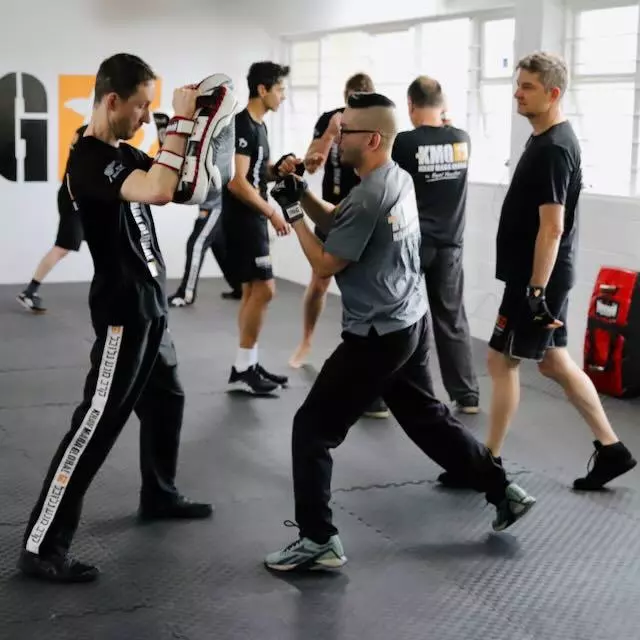
Foundations
Builds the essential striking, movement and self-defence skills every practitioner needs.

Depth
More complex scenarios, longer combinations and greater tactical understanding.
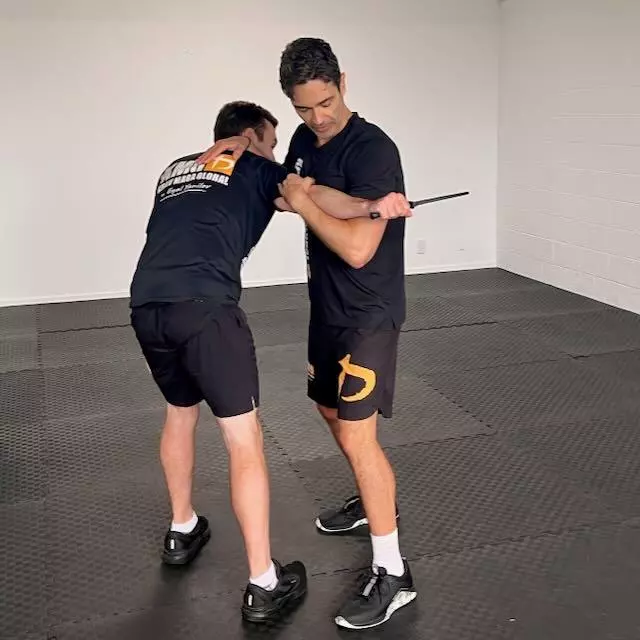
Pressure
Pressure testing, decision-making and advanced tactics under stress.
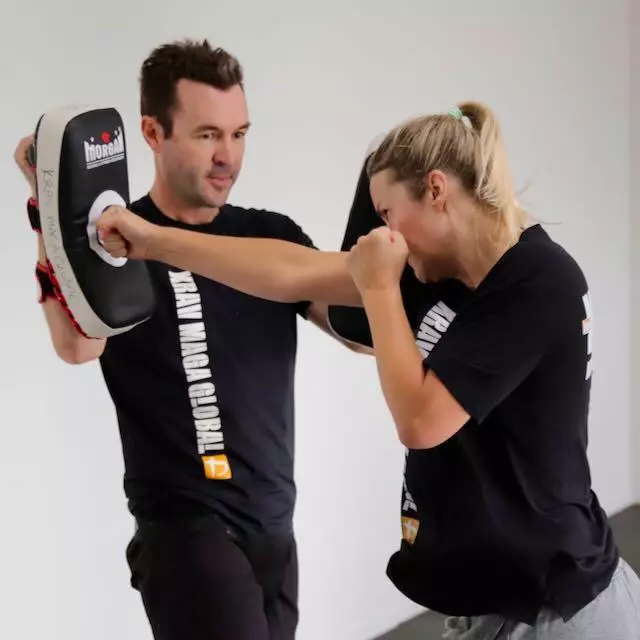
Teaching
For experienced practitioners who want to teach and help develop others.
Regular Opportunities, Never Compulsory
Three grading opportunities a year.
Two grading opportunities a year.
One grading opportunity a year.
Grading is never compulsory. Plenty of members train for years without formally grading, and that's completely fine. For those who do want it, regular opportunities and dedicated preparation are built into the schedule to keep momentum without adding pressure.
Learning Is More Motivating Than Repeating
In Instructor Aaron's experience training members for over a decade, the ability to keep learning and progressing is one of the biggest reasons people stay engaged for years rather than months. Working toward a grading gives training structure and purpose that pure repetition doesn't — a measurable goal, real momentum, and a genuine sense of achievement when you get there.
That's not the only reason members stay — but it's a significant one, and it's why progression is treated as a priority here, even though it's never compulsory.
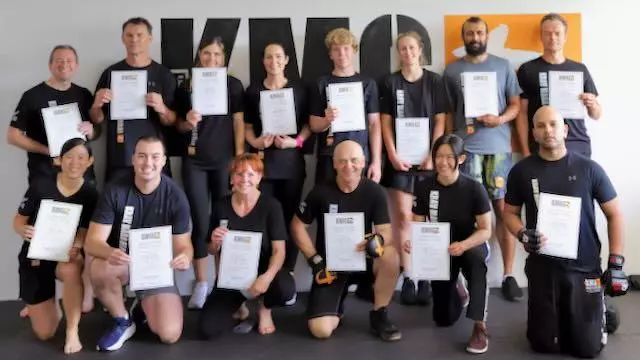
"After 4 months training, it culminated in being able to defend against 3 attackers at level 1 grading. I was thrilled to pass my first grading along with my son. Looking forward to the next level."
— Sharon, Google Review
"I've been training for 5 years now and enjoy it as much as when I first started. A fun, friendly environment with great instructors. An awesome way to learn self-defence and gain confidence."
— Scott, Google Review
Questions About Progression
No. Grading is entirely optional. Plenty of members train for years without formally grading, purely for the training itself. For those who do want it, regular opportunities and dedicated preparation are built into the schedule.
P1 gradings run three times a year. P2 through P5 run twice a year. Graduate-level gradings run once a year.
Your instructors tell you when you're ready, based on your attendance and how your skills are developing — for Practitioner 1, that's typically after around 40 classes. For typical timelines at each stage, see how long it takes to get good at Krav Maga.
Your instructor gives direct feedback on what to work on, and you're welcome to keep training and try again at the next opportunity. Grading is about genuine readiness, not a single pass-or-fail moment.
Before every grading there are dedicated curriculum review and revision sessions, alongside regular feedback in class on what's working and what to improve. Video resources are also available to review technique between sessions.
Ready to Start Your Own Progression?
No experience needed. Come to a trial class and see how the training works before you think about levels at all.
47 Birkenhead Avenue, Birkenhead, Auckland 0626 · Full timetable and details