How Krav Maga Training Builds Real Confidence
Krav Maga training builds genuine confidence by teaching practical skills under controlled pressure — not by making people aggressive or fearless. At Krav Maga Auckland, that confidence develops session by session, through repetition and progressive challenge in a structured KMG curriculum.
Most people don't walk into their first Krav Maga class feeling confident. They feel nervous, unsure whether they'll fit in, or quietly convinced that everyone else is already better than them.
That's not a problem. That's actually the starting point. Real confidence in Krav Maga doesn't arrive on the first day — it grows from repeatedly experiencing pressure, solving problems, and discovering that you're capable of more than you thought.
It's one of the reasons many members continue training long after they first joined for fitness or self-defence. The physical skills are part of it. But something else shifts too.
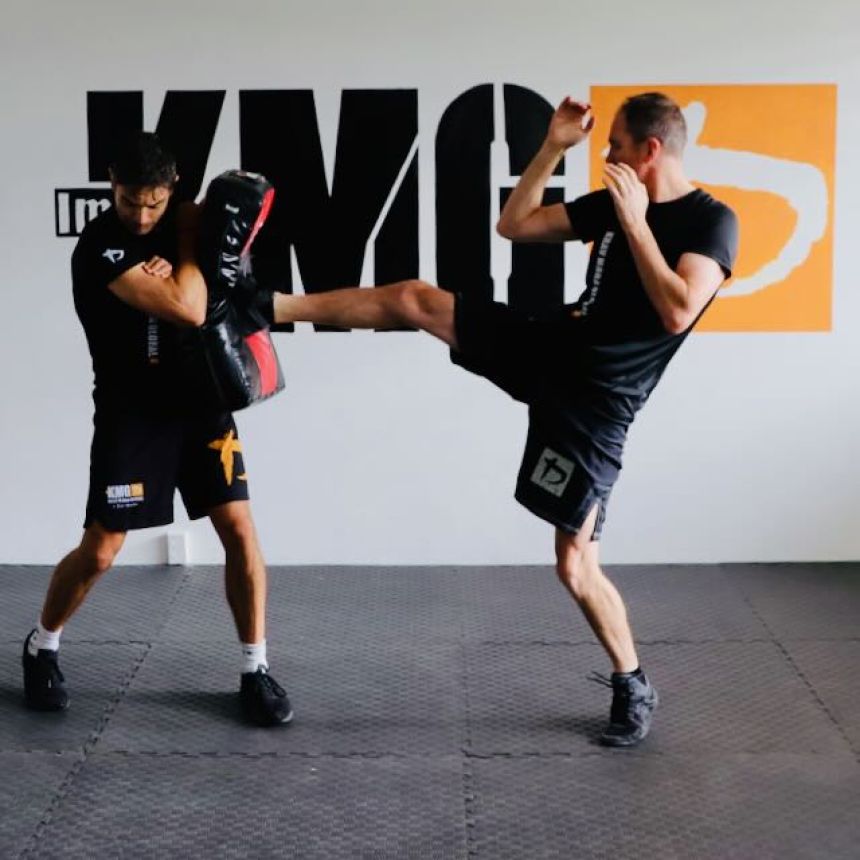
Instructor Aaron and Instructor Brad — Krav Maga Auckland, Birkenhead
What Real Confidence Actually Looks Like
Confidence built through training looks nothing like the loud, aggressive version people sometimes associate with martial arts. It's quieter than that — and more durable.
There's an important distinction worth making early. There's the kind of confidence that's really ego: a need to posture, to dominate social situations, or to perform toughness. That's not what consistent training tends to produce. In fact, the more seriously someone trains, the less they need to announce it.
What develops instead is something closer to calmness under pressure. Better decision-making in stressful moments. The ability to stay composed when things get uncomfortable. A quiet sense of "I've been in hard situations — I can handle this."
The distinction matters because it changes how the confidence shows up. Not in aggression. In composure. Not in how loudly you speak. In how clearly.
Why Learning Practical Skills Changes How You Carry Yourself
Competence — actual, demonstrable competence — changes your relationship with stress. When you've drilled a response repeatedly until it becomes automatic, the scenario it addresses stops feeling threatening in the same way. Not because the threat has gone away, but because you've changed.
The KMG curriculum at Krav Maga Auckland covers striking, defence against grabs and chokes, movement, ground defence, and verbal boundary-setting. Each of those areas goes through the same process: introduce the concept, drill it in controlled conditions, then progressively increase the pressure through partner resistance and scenario work.
That process — stress, uncertainty, controlled resistance, then improvement — is exactly what builds confidence. Not the techniques themselves, but the experience of facing something hard and working through it.
People who go through that cycle enough times start to notice it outside training. They feel it when something stressful comes up at work, when a conversation gets uncomfortable, when something unexpected happens. The calm that training produces doesn't stay inside the gym.
Being Nervous on Day One Is Normal — and Expected
The nervousness most beginners feel before their first session is almost universal — and almost always disappears within the first 15 minutes of training.
The fears are consistent across different people. Worry about fitness level. Concern that everyone else will be advanced and already know each other. Fear of embarrassment. Uncertainty about sparring or injury. Wondering whether age is a disadvantage.
These are understandable — and worth addressing directly.
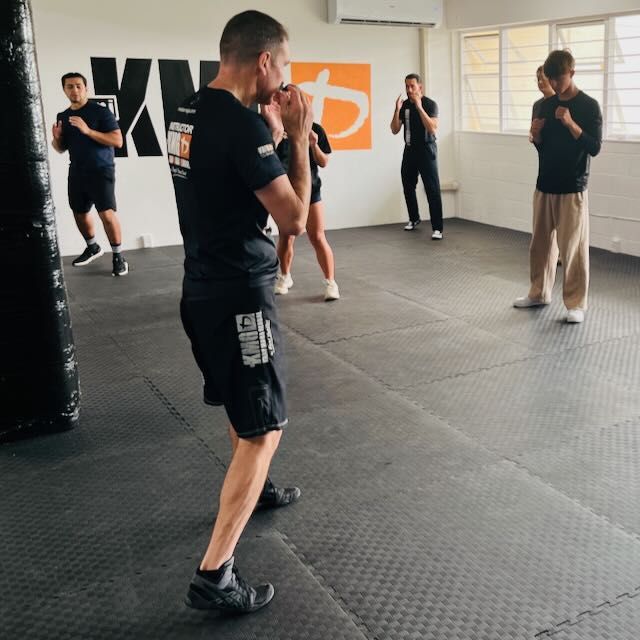
Krav Maga Auckland's Essentials programme is structured specifically for people with no prior training. You work in pairs, not in open sparring. Contact is calibrated to your level. Nobody is watching to judge whether you get it right first time. The pace is designed around gradual progression, not performance.
"I've never been to any martial art classes before and with a bit of nervousness I attended my first class. I was amazed how friendly but professional the instructors are — other students are just like you and me."
— ChrisThe "other students are just like you" observation is the one that tends to land hardest. Because it's true. Most people in the room on any given session had the same nervousness on their first day. They know exactly what it feels like to be new.
How Training With Others Accelerates the Process
Training with a consistent group of people accelerates confidence development in a way that solo training — or training in a conventional gym — simply cannot replicate.
Most people push harder in a group environment than they would training alone. It's not pressure to perform. It's the quiet encouragement of shared challenge — everyone in the room is working through the same drill, the same difficulty, the same fatigue. That collective experience creates accountability and momentum that's very hard to manufacture on your own.
Partner work adds another dimension. You're not hitting a bag or working through a programme on a screen. You're working with a real person — learning to read their reactions, calibrate your response, communicate mid-drill. That relational element is a significant part of why Krav Maga training transfers to real life in ways that solo fitness training often doesn't.
The social reinforcement builds over time too. Recognising your own progress. Seeing it reflected in how you move and respond. Having that progress confirmed — sometimes wordlessly — by the people you train alongside.
Confidence for Women: A Different Set of Considerations
For many women, Krav Maga training addresses something that most fitness programmes don't touch: the specific confidence that comes from knowing you can set a physical boundary.
That's distinct from general fitness confidence or even general self-defence theory. It's experiential — built from actually practising boundary-setting, working under realistic pressure, and discovering that effectiveness in self-defence doesn't require matching an attacker's size or strength.
The KMG system is built around this reality. Techniques are selected and refined specifically for situations where a size or strength disadvantage is assumed. The training prioritises awareness, de-escalation, and efficient physical response — in that order. Women who train at Krav Maga Auckland work through scenarios calibrated to the situations most statistically relevant to them.
"As a woman of a smaller build I have found that these classes have strengthened me both physically and mentally. Anyone can learn from here — it is a positive, open and welcoming environment."
— Christine"Empowering and effective self-defence. As a woman it is a great confidence builder — as well as being fun and improving physical fitness."
— MoniqueWhat Happens Outside the Training Room
The changes that happen through consistent training don't stay in the gym. They're not dramatic or sudden. But they're real, and people who've trained for several months tend to notice them.
Better posture. Not as a self-improvement goal, but as a natural consequence of how you move after months of drilling stance, balance, and footwork. More assertive communication — not aggressiveness, but the comfort of being direct when it matters. Greater tolerance for discomfort. Better reactions under time pressure.
These aren't outcomes the KMG programme claims to deliver. They're what tends to happen when people repeatedly face difficult situations in a structured, safe environment and work through them. The psychological mechanisms are well-documented: self-efficacy (the belief in your own ability to handle challenges) grows through successful experience of difficulty, not through being told you can do it.
It's worth being clear about what isn't claimed here. Krav Maga training doesn't transform anyone's personality or resolve underlying mental health challenges. But for people whose confidence has been limited by a lack of physical capability, or by never having been in a demanding environment before, the difference is often significant.
Confidence Comes From Doing Difficult Things Repeatedly
The mechanism behind confidence-building in Krav Maga is straightforward: you repeatedly do hard things, and you don't fail at them. Not always — some things take longer. But the progressive structure of the curriculum is designed so that each session stretches you without breaking you.
Drills build physical memory. Fatigue during training teaches you that you can continue past the point where you'd normally stop. Pressure testing — working a technique against resistance, under time constraint, under mild stress — is where skills actually get embedded. And gradual progression through the KMG grading system gives that process a visible shape over time.
That shape matters psychologically. There's a meaningful difference between "I've been training for six months" and "I've been training for six months and I've progressed to this level." The second gives the brain something concrete to anchor confidence to.
This is also why the fitness element of training reinforces confidence rather than detracting from it. Getting significantly fitter — which happens reliably with consistent training — is its own category of demonstrated capability. The physical change is visible and measurable. It confirms, in a different domain, the same lesson the technical training is delivering: you can do things you previously thought were out of reach.
What Krav Maga Confidence Actually Looks Like in Practice
If you spent time around the people who've trained consistently at Krav Maga Auckland, you wouldn't notice aggression or bravado. That's not what the training produces — and it tends to be the first thing to go when someone gets serious about their training.
What you'd notice is composure. People who are comfortable being uncomfortable. Who make decisions clearly rather than reactively. Who don't need to tell you they can handle themselves, because they've experienced — repeatedly, in controlled conditions — that they can.
That's the version of confidence worth building. It's not loud. It doesn't need to be. And it doesn't evaporate the moment someone bigger or more confident walks into the room.
For more on how the KMG system develops these outcomes across the curriculum, the national KMG NZ site covers the underlying training methodology in depth.
What People Ask About Krav Maga and Confidence
Krav Maga builds confidence through a specific mechanism: you repeatedly face difficult situations under controlled pressure, work through them, and improve. That direct experience of difficulty successfully navigated is what generates real self-efficacy — it's not a claim layered on top of the training, it's a natural consequence of the process. Members who train consistently typically notice changes in how they respond to pressure outside the gym, not just inside it.
Feeling nervous before the first session is close to universal — most people in the room felt exactly the same thing on their first day. The Essentials programme at Krav Maga Auckland is structured specifically for beginners with no prior training. You work in pairs at your own level, contact is calibrated progressively, and there's no open sparring. Fitness comes with training — you don't need it to begin.
Yes — and for many women it addresses something most fitness programmes don't: the specific confidence that comes from knowing you can set a physical boundary. The KMG system is designed around situations where a size or strength disadvantage is assumed, so effectiveness doesn't depend on matching an attacker physically. Scenario training, realistic pressure work, and verbal boundary-setting are all part of the curriculum. Krav Maga Auckland runs women's sessions as part of its regular programme.
Most people notice something within the first few sessions — usually a reduction in the anxiety they felt before starting. More durable changes in confidence (how you carry yourself, how you respond to pressure in daily life) typically become noticeable after two to three months of consistent training. The KMG grading system provides structure and visible progress markers that reinforce this over time.
Consistent training tends to produce the opposite. The KMG curriculum trains awareness, de-escalation, and avoidance as the primary responses — physical defence is the last resort, not the default. People who train seriously tend to become less reactive, not more. The confidence that builds through training reduces the defensive anxiety that often drives aggressive behaviour in the first place.
Krav Maga Auckland runs classes at 47 Birkenhead Avenue, Birkenhead, on Auckland's North Shore. Sessions run Saturday mornings (8:00–9:00am), Monday evenings (6:30–7:30pm), and Wednesday evenings (6:30–8:00pm). The Essentials programme for new starters runs in structured intakes — book a trial session to see if it's the right fit before committing.