Can Krav Maga Replace the Gym? A Realistic Look at Training 2–3 Times Per Week
Yes — for most people, Krav Maga can replace the gym as your primary form of fitness. Training two to three times per week at a certified Krav Maga Global club like Krav Maga Auckland provides strong cardiovascular conditioning, strength endurance, and full-body engagement. The main trade-off is that it isn't designed for building maximum muscle size or highly targeted strength — but for overall fitness, it's more than enough for most adults.
One of the most common questions people ask before starting Krav Maga training on Auckland's North Shore is whether they need to keep going to the gym — or whether Krav Maga can become their main form of training.
The answer depends on what you want from your training. But for most adults, especially those who struggle with motivation or consistency in the gym, Krav Maga doesn't just replace it — it often works better. For a full breakdown of what the training does to your body, see Is Krav Maga a good workout?
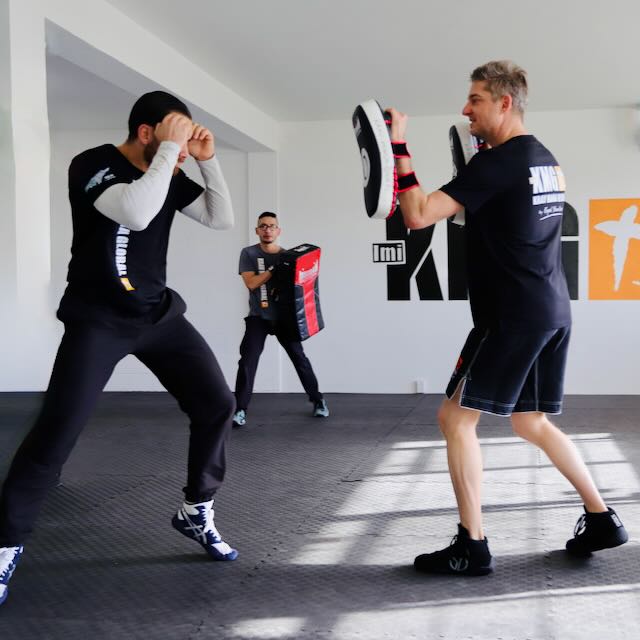
Pad work — North Shore class, Birkenhead.
Can Krav Maga be your main form of exercise?
For most people, yes — Krav Maga can absolutely be your primary fitness activity. Training two to three times per week provides enough stimulus to improve cardiovascular fitness, strength endurance, coordination, and overall conditioning.
At Krav Maga Auckland on the North Shore, most members training twice per week notice clear improvements in fitness within the first month — especially cardio and overall energy levels. The Krav Maga Global curriculum builds this conditioning progressively, so the demand grows with your capacity rather than staying static like most gym programmes tend to.
The key difference from the gym is that Krav Maga isn't structured as a workout. You're not counting reps or following a programme. The fitness comes from the way the training is delivered — pad rounds, partner drills, movement under pressure. This tends to produce better long-term consistency: people don't stop because they're bored, and Krav Maga tends to survive busy periods better than gym routines.
What fitness do you gain from Krav Maga — and what do you miss?
Krav Maga gives you broad, functional fitness — but not specialised gym results.
- What you gain: cardiovascular endurance, strength endurance, coordination, core engagement, and the ability to perform under fatigue. Most people also see body recomposition — leaner and more capable — within the first two to three months of consistent training.
- What you don't maximise: muscle hypertrophy (size), heavy compound strength (deadlift, squat maxes), or highly targeted body composition programming.
This is why many people describe Krav Maga as getting them "in shape" rather than "big" or "strong" in a gym-specific sense. If your goal is to look like a bodybuilder or maximise strength numbers, the gym still has a role. But if your goal is to be lean, capable, and fit — Krav Maga delivers that directly and without requiring you to self-programme.
Is 2–3 classes per week actually enough?
Yes — two to three classes per week is enough for meaningful fitness improvements.
For most North Shore members balancing work, family, and training, this frequency is realistic and sustainable long-term. The Krav Maga Auckland timetable runs Saturday mornings at 8:00am, Monday evenings at 6:30pm, and Wednesday evenings at 6:30pm — meaning two classes per week is achievable without needing to rearrange your week.
The reason this works is intensity. A Krav Maga session isn't passive — you're moving, striking, reacting, and working under pressure for most of the hour. Two sessions a week replaces what most people would get from multiple gym sessions, cardio workouts, and a group fitness class combined. That's why it fits so well into a busy schedule.
Why do people find Krav Maga easier to stick to than the gym?
The biggest difference isn't physical — it's psychological.
This is especially noticeable in the North Shore classes, where many members come from gym backgrounds but stay because the training is more engaging and structured. Most people don't quit the gym because it doesn't work. They quit because it's repetitive, self-directed, and easy to deprioritise.
Krav Maga changes that dynamic in four specific ways:
- You're learning something — every session builds a new skill or deepens an existing one. The progression is visible.
- You train with others — partner drills create built-in accountability. Missing a class means your partner trains without you.
- The sessions vary — the KMG curriculum cycles through different techniques and scenarios, so no two weeks feel identical.
- The training has a real-world purpose — it's not just fitness for its own sake. That changes how seriously people take it.
Should you still combine Krav Maga with other training?
It depends on your goals — but you don't have to.
The three combinations that work well in practice:
- Krav Maga only (2–3x/week) — best for simplicity and consistency. Strong fitness results without managing multiple programmes.
- Krav Maga + strength training (1–2x/week) — best for body composition. Strength training adds grip, pushing power, and structural resilience that complements Krav Maga's conditioning. Useful if hypertrophy is a specific goal.
- Krav Maga + light cardio — useful if you genuinely enjoy running or cycling and want to keep it. Not necessary for fitness, but adds aerobic base if you're training for events or extended endurance.
If you're based on Auckland's North Shore and looking for a training option that replaces the gym, the simplest approach is often the most effective — consistent Krav Maga training without overcomplicating your schedule. To understand exactly what each session involves, see Krav Maga classes on the North Shore.
What people ask about Krav Maga as a gym replacement
For most people with general fitness goals, yes. Training two to three times per week at a certified Krav Maga Global club delivers cardiovascular conditioning, strength endurance, and full-body engagement comparable to a regular gym routine. The trade-off is that Krav Maga isn't optimised for maximum muscle size or specific strength gains — if those are your primary goals, you'd supplement with resistance training.
Two classes a week is the realistic threshold for meaningful fitness improvements. One class a week maintains your level and slowly improves coordination. Three classes per week accelerates everything — better body composition, faster conditioning, more rapid skill development — but most people see strong results from two sessions.
The calorie burn is comparable — a 60-minute Krav Maga class burns roughly 500–700 calories, similar to a hard gym session. The difference is consistency: people tend to keep coming to Krav Maga because the training is engaging and skill-based, rather than dropping off like many gym memberships. Weight loss depends primarily on diet, but training you actually attend beats training you don't.
No — Krav Maga builds strength endurance and lean muscle through body-weight work, striking, and partner drills, but it isn't designed for hypertrophy. If maximum muscle size is your goal, you'd need resistance training alongside Krav Maga. Most students find the body recomposition from regular Krav Maga training is more than enough for the fitness results they're actually after.
No prior fitness or gym experience is needed. The KMG curriculum is built for adults starting from wherever they are. The training scales to your current level, and your conditioning develops as a direct result of the sessions rather than being a prerequisite for them.
Try Training for Yourself
Train with us in Birkenhead on Auckland's North Shore — beginner-friendly classes available, no prior fitness required.
Book a Trial ClassNo experience needed. Start at your own pace.